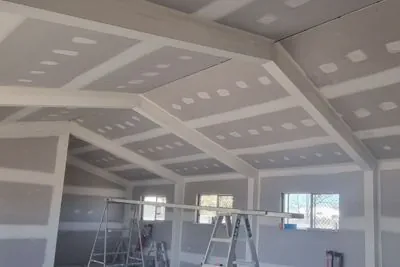
What Happens to Plasterboard When It Gets Wet
Plasterboard is made from a gypsum core sandwiched between paper facing. Once water gets in, that core softens quickly and loses its structural integrity. What looks like a small stain on the surface can mean the board behind it is already compromised.
Water-damaged plasterboard does not recover its original strength once it has been saturated. The question is always how far the damage has spread and whether the board needs to come out entirely.
Signs Your Plasterboard Has Been Affected
A water stain is the most obvious sign, but it is rarely the full picture. Bubbling paint, sagging sections, soft spots when you press the wall or ceiling, and a musty smell are all indicators that the board has absorbed moisture.
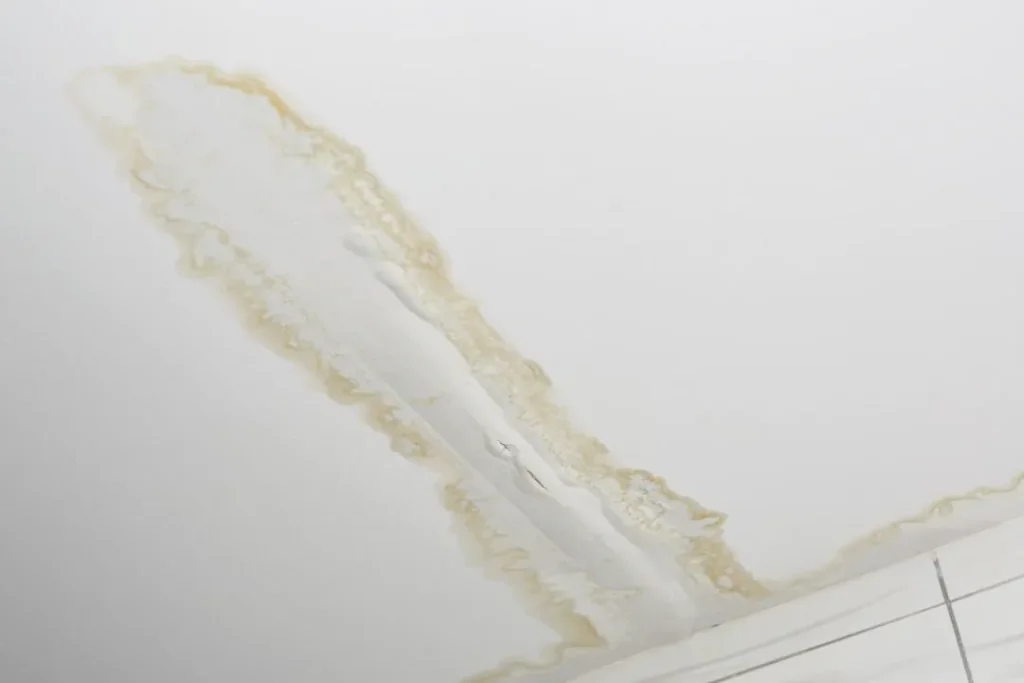
Discolouration that keeps spreading after rain or after a plumbing event tells you the source has not been fixed. A stain that stays the same size and dries out evenly is a different situation to one that grows with every wet day.
Fix the Leak Before Anything Else
Repairing a water-damaged ceiling or wall before the source of moisture is resolved is a waste of time and money. New plasterboard installed over an active leak will fail just as quickly as the old board did.
Identify where the water is coming from first. That might mean a plumber checking pipes, a roofer inspecting the roof, or simply tracing the path of water back to where it enters the building. No repair work should start until the source is confirmed and fixed.
Drying Out Versus Replacing the Board
Not every wet plasterboard situation requires a full replacement. If the board got damp but dried out quickly, has no visible sagging or soft spots, and the moisture source was minor and short-lived, it may be salvageable.
However, board that has been saturated, has lost its rigidity, is visibly sagging, or has been wet for an extended period needs to come out. Trying to patch over structurally compromised board leads to cracking, further failure, and ongoing problems.
A plasterer can assess the board by checking for softness, delamination of the paper face, and whether the joins or fixings have been affected. That assessment determines whether a patch repair is appropriate or whether a section needs to be cut out and replaced with new plasterboard installation.
Mould Is a Real Risk in Townsville’s Climate
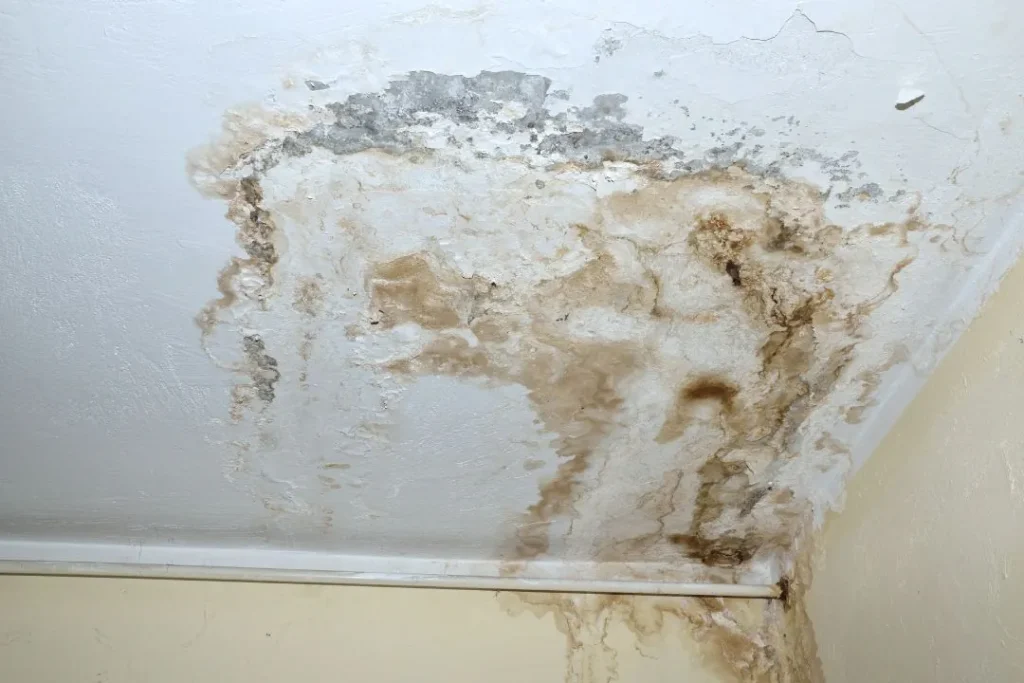
Townsville’s wet season creates conditions where damp plasterboard can develop mould quickly. Mould does not need much time to establish once moisture is present in a warm, humid environment.
Mould inside walls and ceilings is not just a cosmetic issue. Queensland Health recognises mould as a health concern in northern Queensland, particularly after flooding or prolonged dampness. If you can see or smell mould, the affected material needs to be removed properly rather than painted over or sealed.
Do not attempt to sand or dry-scrub mouldy plasterboard without appropriate protection. If the affected area is large, speak to a professional about safe removal before any repair work begins. Queensland Health provides guidance on managing mould after water damage that is worth reading if your home has been affected.
Electrical Safety Around Water-Damaged Areas
Water and electrical fittings are a serious combination. If the water-damaged area is near downlights, exhaust fans, power points, or any other electrical fitting, do not assume those fittings are safe just because the water has dried up.
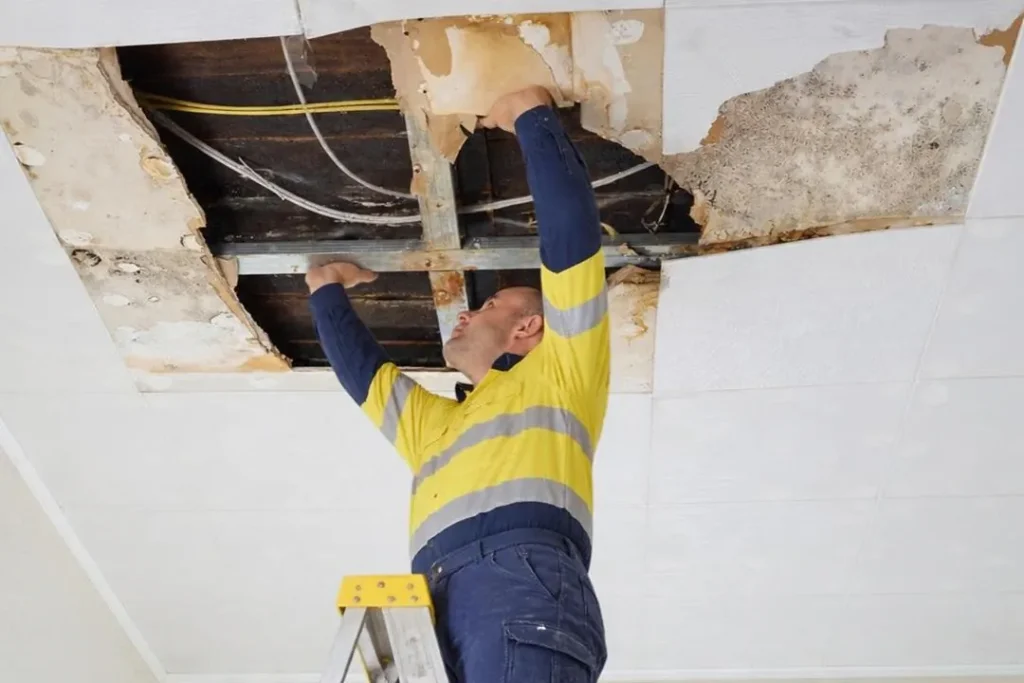
Water can track along cables and into fittings well beyond the visible damage zone. The Electrical Safety Office recommends having a licensed electrician inspect any water-affected electrical installations before repair work proceeds. Their guidance on electrical safety after water events outlines what needs to be checked and why.
Do not restore power to affected circuits or use fittings in water-damaged areas until an electrician has cleared them.
What the Repair Process Looks Like
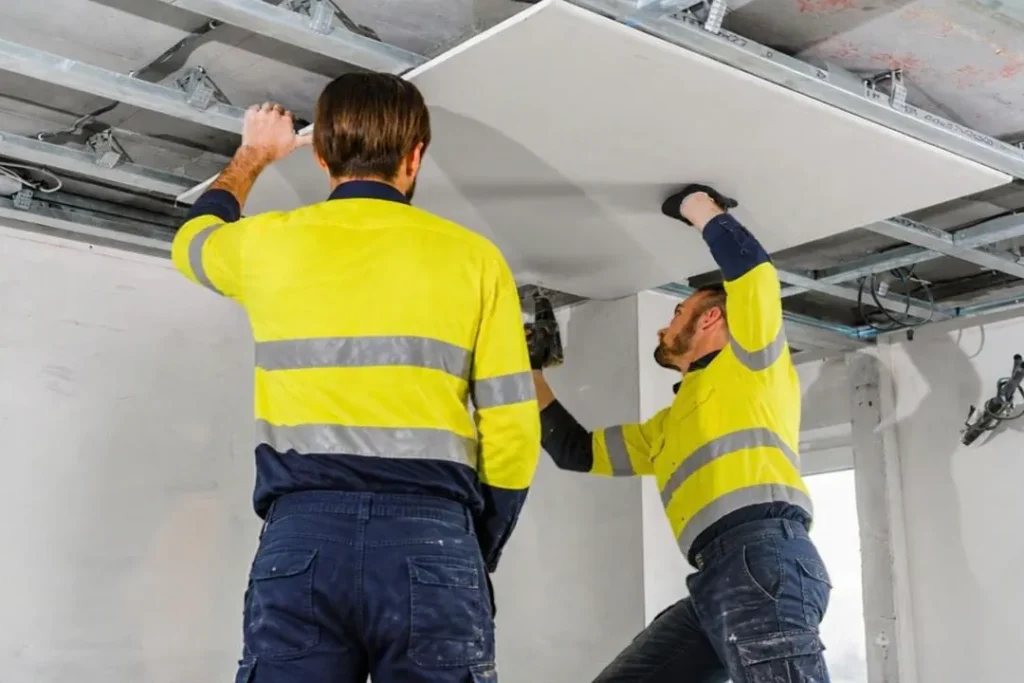
Once the leak is fixed, the area is dry, mould is addressed, and electrical fittings are cleared, the plastering repair can begin. For minor surface damage, this might involve cutting back to sound board, patching, and recoating. For larger areas, full sheet replacement followed by taping, jointing, and finishing is the standard approach.
The goal is a surface that matches the surrounding wall or ceiling so the repair is not visible once painted. Good ceiling repairs require proper preparation, the right materials, and enough time for each coat to cure before the next is applied.
Rushing the process to get paint on quickly is one of the most common reasons repairs fail or show up as cracks and ridges within a few months.
Choosing the Right Plasterer for the Job
Water damage repairs require someone who can assess what is salvageable, remove what is not, and finish the repair to a standard that holds up. Knowing what to look for before you hire matters, and understanding what separates a quality tradesperson from a cheap quote can save you from repeating the job. The key things to check when selecting a plasterer in Townsville include licensing, experience with repair work, and how they handle the assessment process.
What to Do Right Now
If you have noticed a stain, soft spot, or sagging section, the steps are straightforward. Stop the water source, keep the area ventilated, check for mould, and get an electrician involved if any fittings are nearby.
Do not paint over the damage or attempt to hide it before the underlying cause is resolved. Water damage that is covered up without being properly fixed will always reappear.
Get a Quote for Water Damage Repairs in Townsville
If your home in North Ward, Belgian Gardens, Hermit Park, or anywhere across Townsville has water-damaged walls or ceilings, get a proper assessment before committing to any repair approach.
For a plasterer Townsville locals rely on for honest assessments and quality repair work, our team is ready to help. Call (07) 4800 0366 or get in touch online to arrange your free quote.